
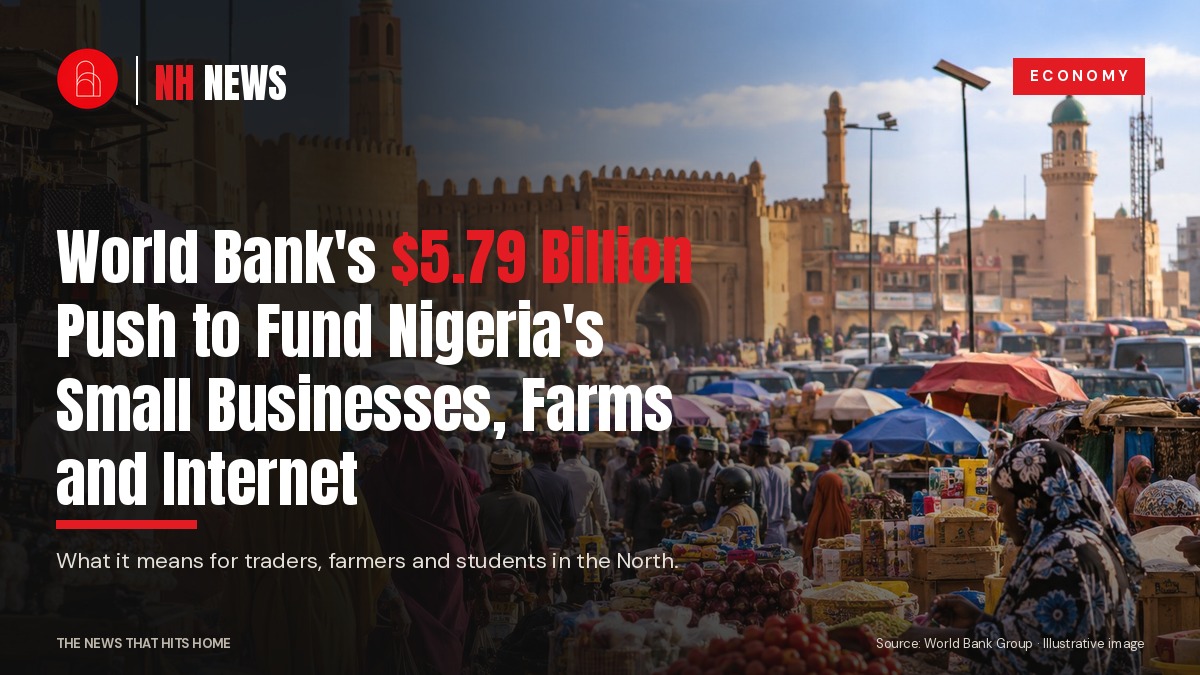
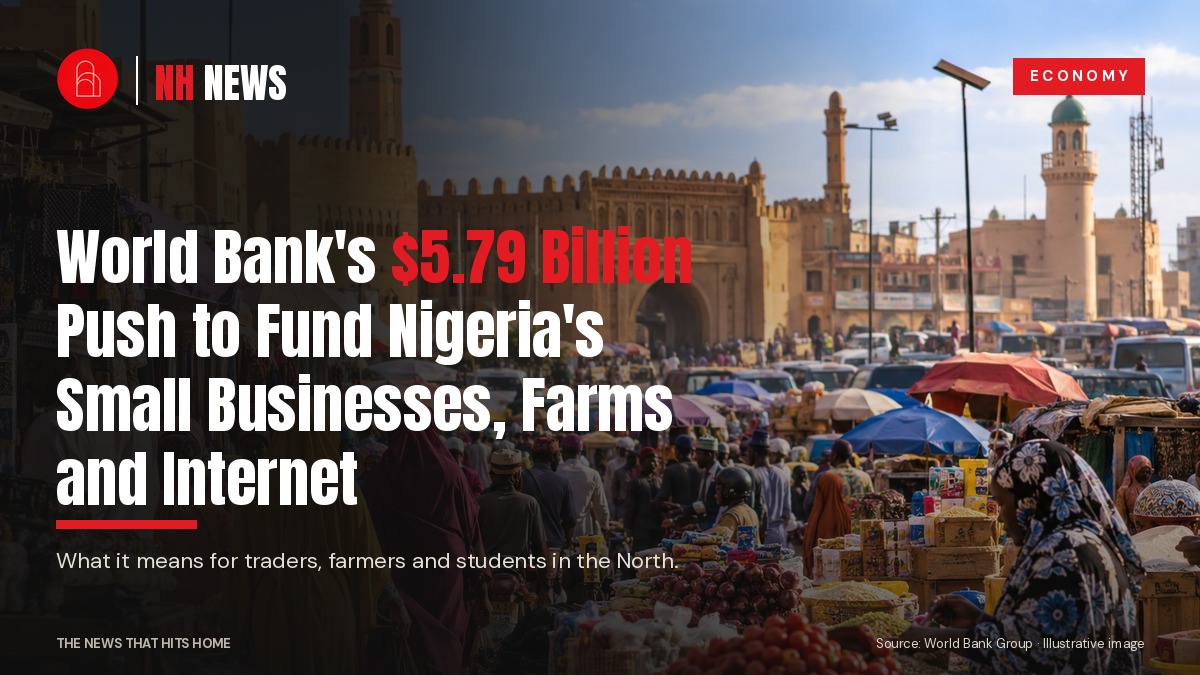
Nigeria could attract up to $5.79 billion in private financing during the 2026 financial year, according to a new report by the World Bank Group.
The money is expected to support investment in small businesses, agriculture, internet infrastructure and other sectors that could create jobs and expand economic opportunities.
But abeg, before we get carried away by the billions, let’s ask the important question:
How will this affect ordinary Nigerians?
First, let’s clear something up. This is not $5.79 billion in cash being handed to the Nigerian government or shared among citizens. The figure represents private financing the World Bank Group says it is helping to mobilise through different projects, investments and partnerships with businesses and financial institutions.
So, what exactly is planned? Let’s break it down.
Small Businesses Could Get Better Access to Financing
Running a small business in Nigeria is not for the faint-hearted.
One day, customers are buying. The next day, you are calculating the cost of restocking, paying rent and keeping the lights on. And when you need money to expand, getting a loan on affordable terms can be another challenge entirely.
The World Bank Group’s Fostering Inclusive Finance for MSMEs in Nigeria programme, known as FINCLUDE, aims to expand access to finance for more than 250,000 micro, small and medium-sized enterprises.
The programme is expected to mobilise nearly $1.89 billion in private financing, with 30 per cent of financing targeted at women-led businesses. It is also projected to support about 850,000 direct and indirect jobs.
Think about a tailor who wants to buy more sewing machines, a food business looking to expand production or a trader who needs more stock to meet customer demand. Access to suitable financing could help businesses like these grow.
But there is a catch: the report does not specify the interest rates, application process or exact terms under which individual businesses may access the financing.
For now, the opportunity looks promising. The real test will be whether business owners can actually obtain the money on terms they can afford.
One Million Farmers Are in Focus
Agriculture is another major part of the plan, and this one deserves attention, especially in Northern Nigeria, where farming supports many households and local businesses.
The World Bank Group’s Agricultural Value Chains for Growth project, known as AGROW, targets one million smallholder farmers, including women and young people.
The programme aims to improve access to quality seeds, fertiliser, digital services and reliable markets.
According to the report, AGROW is expected to attract approximately $220 million from agribusiness companies and another $22 million from certified seed producers.
Why does this matter?
A farmer who cannot afford quality seeds or fertiliser may struggle to produce enough crops. And even when the harvest is good, finding reliable buyers at reasonable prices can be difficult.
Improving access to agricultural inputs and markets could help farmers become more productive, strengthen food supply chains and create opportunities for businesses connected to agriculture.
However, the report does not state how much of this planned investment will go specifically to Northern states. That is an important detail to watch as the programme develops.
Millions More People Could Get Internet Access
Imagine a student who struggles to attend online classes because the internet is unreliable. Or a small business owner who cannot reach customers outside their immediate community because connectivity is poor.
That is the kind of challenge another project highlighted in the report hopes to address.
The Building Resilient Digital Infrastructure for Growth project, known as BRIDGE, aims to extend broadband access to an additional 58 million people by 2030.
The plan is to increase the number of people with broadband access from 92 million in 2025 to 150 million by 2030.
The project also aims to connect 38,800 public schools, 16,900 health facilities and 3,400 local government offices to high-speed internet.
To support this expansion, the first round of investor selection is expected to mobilise at least $156 million in private equity, while subsequent financing rounds could unlock up to $1.1 billion in private investment by 2030.
In everyday terms, better internet access could help students learn, businesses sell online, health facilities use digital services and young people access opportunities that were previously out of reach.
But let’s be clear: these are targets for the coming years. They do not mean all the planned connections are already in place.
Could This Help With Fertiliser and Food Production?
The report also highlights financing involving Dangote Industries and Indorama Fertilizer to support domestic fertiliser production.
Together, the two projects have an annual production capacity of 6.8 million metric tonnes. The investments are intended to improve access to agricultural inputs for more than 10 million smallholder farmers.
Why should Nigerians care about fertiliser production?
Because what happens on the farm can affect what eventually reaches the market. Farmers need reliable access to inputs to produce crops, and disruptions or high costs can put pressure on the entire food supply chain.
Increasing domestic fertiliser production could help strengthen supply and reduce reliance on imports.
However, higher production does not automatically mean lower prices for farmers. Distribution costs, affordability and access will still matter.
In other words, we need to watch what happens beyond the factory gates.
So, Will Ordinary Nigerians Actually Benefit?
This is where the conversation gets interesting.
The World Bank Group says the financing is intended to support investment, infrastructure, businesses and jobs. But the announcement sets out financing plans and expected outcomes, not benefits that every Nigerian can already access.
For the impact to be felt, businesses must be able to obtain suitable financing, farmers must receive the agricultural support they need, and planned internet infrastructure must be built and made accessible.
There is also a question of distribution. The report does not provide a state-by-state breakdown of the planned financing, so we cannot yet say how much will reach individual communities across Nigeria.
The headline figure is significant, but implementation is what will determine its real value.
NH’s Take: Billions Are Good. But What Changes for the People?
Toh fa, $5.79 billion is no small amount. But Nigerians have heard plenty of big promises before. What people want to know is what changes in their daily lives.
Can a small business owner access financing without facing impossible conditions? Can a farmer obtain fertiliser at a price that makes farming worthwhile? Can a young person in a rural community get reliable internet to study, work or build a business?
Those are the questions that matter.
The World Bank Group’s plans could open up opportunities across several important sectors. But the impact must go beyond impressive figures in a report.
Because economic growth is not just about billions on paper. It is about businesses that can grow, farmers who can earn more, young people who can access opportunities and families who can afford the things they need.
That is when the numbers begin to mean something.
NH News — The news that hits home.
Source: World Bank Group, “Unlocking $5.79 Billion in Private Financing: The World Bank Group Is Leading the Charge for Private Capital Mobilization in Nigeria,” published October 11, 2026.