
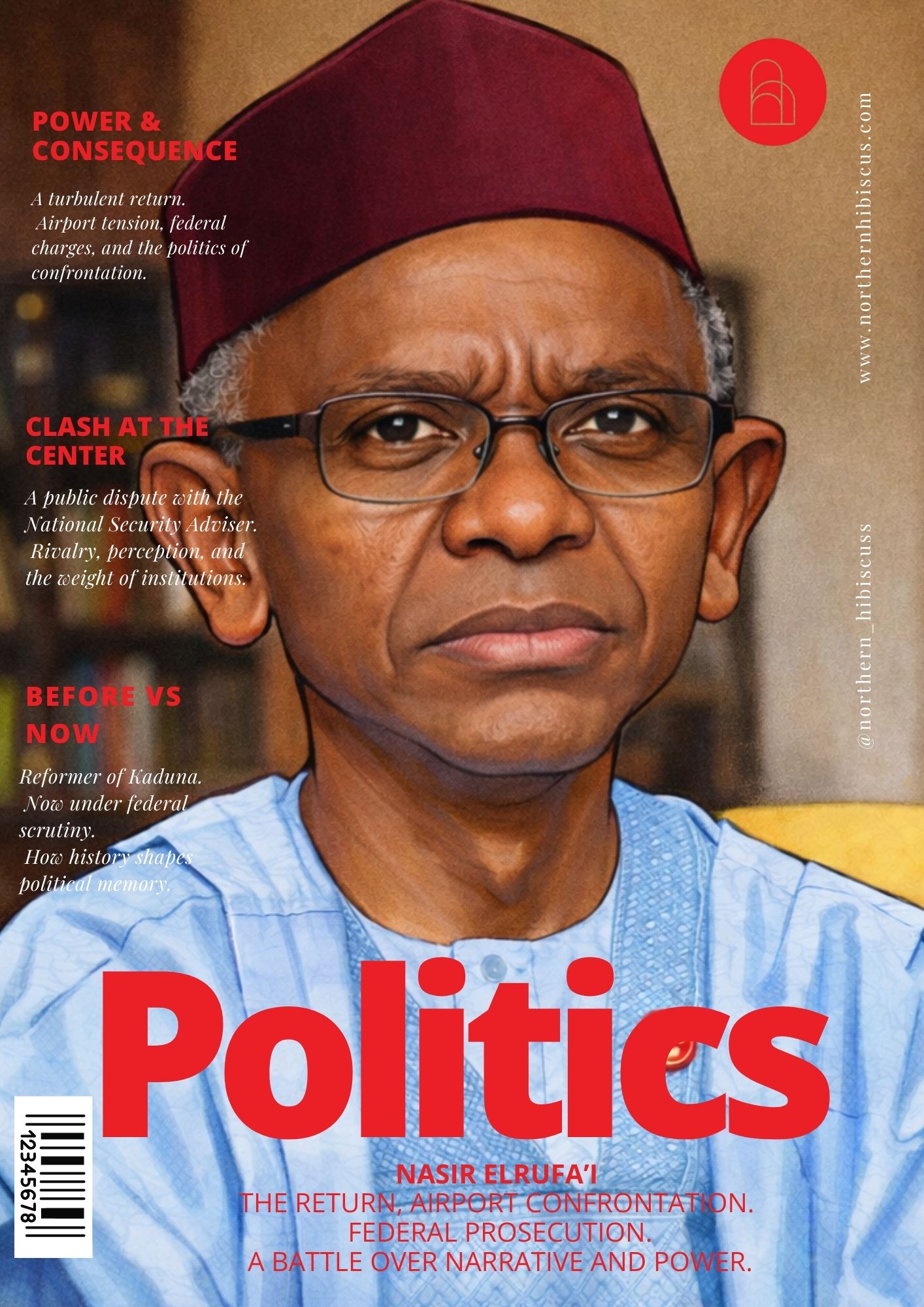
In recent weeks, Nasir El-Rufai has found himself at the center of one of Nigeria’s most closely watched political developments. What began as an attempted detention at an airport has evolved into a complex legal and political confrontation involving federal agencies, public protests, and renewed scrutiny of his political trajectory.
A Return Marked by Tension
The situation intensified when El-Rufai returned to Nigeria through Nnamdi Azikiwe International Airport in Abuja. Security operatives attempted to detain him following an invitation by anti-graft agencies. The move, reportedly linked to ongoing investigations into his tenure as governor of Kaduna State from 2015 to 2023, immediately triggered public attention.
In the hours that followed, El-Rufai publicly accused the National Security Adviser, Nuhu Ribadu, of directing the attempt to detain him. He claimed that an intercepted communication revealed plans for his arrest, an allegation that has since become central to the unfolding dispute. Ribadu has denied the claims.
Escalating Legal Pressure
Shortly after the airport episode, the Economic and Financial Crimes Commission detained El-Rufai for questioning in Abuja. The interrogation relates to allegations of financial impropriety during his governorship, including claims concerning loans, contract awards, and infrastructure projects.
At the same time, the Department of State Services filed a three-count charge at the Federal High Court in Abuja accusing El-Rufai of unlawfully intercepting communications linked to the National Security Adviser. The charges are tied to comments he made during a televised interview in which he suggested that Ribadu’s phone had been tapped.
The case is reportedly being pursued under provisions of the Cybercrimes Amendment Act and the Nigerian Communications Act. If sustained, the charges carry potential penalties that include fines or imprisonment.
El-Rufai has denied wrongdoing and described the investigations as politically motivated.
Public Reaction and Political Undercurrents
The developments have divided public opinion. Supporters have described the investigations as targeted persecution, while critics argue that the former governor must fully answer questions about his administration.
Protests have occurred in Abuja and Kaduna, with demonstrators both backing the investigations and defending El-Rufai’s right to due process. The atmosphere reflects broader tensions within Nigeria’s political landscape, particularly as early positioning for the 2027 elections begins to take shape.
A Broader Political Context
El-Rufai’s current legal challenges also revive memories of earlier political friction. After the 2023 elections, he was nominated for a ministerial position under President Bola Ahmed Tinubu. However, the Senate declined to confirm him, citing security concerns. Though details were not publicly disclosed, the decision was widely interpreted as a significant setback for the former governor.
Over the years, El-Rufai has built a reputation as a reform-oriented yet combative political figure. As Minister of the Federal Capital Territory under President Olusegun Obasanjo, he implemented sweeping reforms that drew both commendation and criticism. As governor of Kaduna State, he pursued structural changes in education, civil service management, and infrastructure while facing opposition over security and governance issues.
What Comes Next
The legal proceedings now underway could shape not only El-Rufai’s personal political future but also broader conversations about accountability, executive power, and political rivalry in Nigeria.
For some observers, the moment represents a stress test for Nigeria’s institutions. For others, it reflects the enduring tensions between reformist politics and entrenched power structures.
As investigations continue and court processes unfold, the former governor remains both a subject of legal scrutiny and a central figure in Nigeria’s evolving political narrative.